In a high school ceramics course, students learn to hand-build and throw on the wheel, decorate and glaze their work, and fire it, while studying how artists past and present have used clay. Experience Clay, third edition, by Maureen Mackey, is a high school ceramics curriculum that covers it all in nine chapters, from a first pinch pot to raku firing and mixed-media sculpture, and includes interviews with working ceramic artists.
Each chapter provides an opportunity to introduce students to nontraditional approaches to ceramics in contemporary art. The third edition includes all-new studio experiences featuring opportunities for student choice and a new chapter, The Art of Ceramics, that provides an overview of elements and principles, postmodern principles, and the aesthetics of ceramic artworks.
Why Teachers Choose a Ceramics Textbook
A complete textbook gives a ceramics course a clear sequence, a reference students can return to, and the documentation administrators ask for.
A full course, in order. Nine chapters build from clay basics and hand-building to the wheel, surface design, firing, and mixed media. The Teacher Edition adds essential questions and clear objectives throughout.
Written by a ceramic artist and educator. Maureen Mackey holds an MFA in ceramics and an MA in art education.
Print, digital, or both. Choose printed books, eBooks on Davis Digital, or a class set that combines them. The eBook Class Set includes a six-year license for 30 students, with other license lengths and class sizes available by request, plus access to more than 20,000 fine art images.
Standards documentation, ready to share. Correlations to the National Core Arts Standards and eleven states’ standards make curriculum review and adoption easier.
Support beyond the book. Assessment, Studio Support, and Vocabulary Masters add rubrics, technique handouts, and vocabulary practice.
Inside a Studio Experience: Wordplay Sculpture
Every chapter ends with a Studio Experience: a project that puts the chapter’s techniques to work and gives students room to make their own choices. Each one includes research to do before starting, a materials list, step-by-step instructions, and a rubric. Here’s a look at the Studio Experience from chapter 5, Hand-Built Forms: Slabs, Molds, and Tiles.
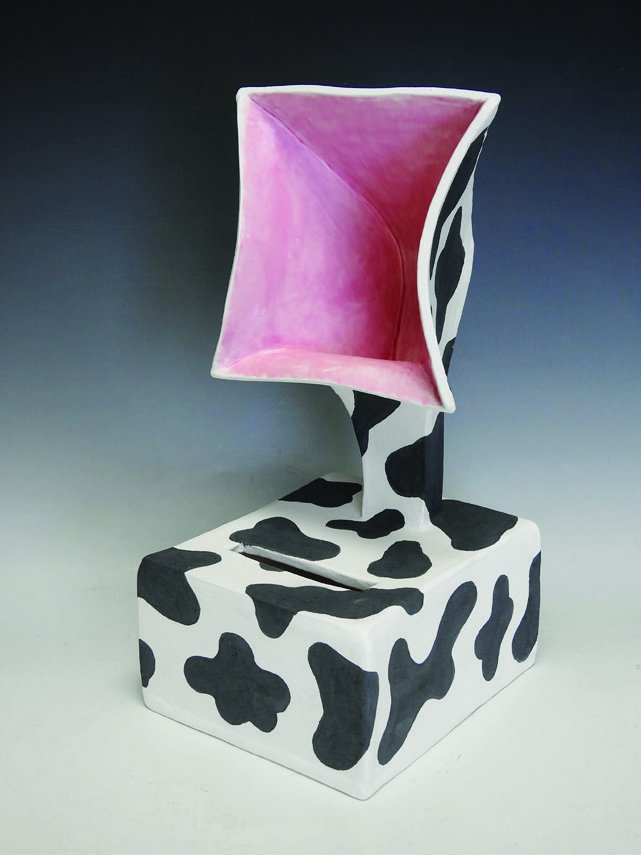
Students use slab techniques to turn a phrase, metaphor, or pun into a sculpture. They study how artists past and present use humor and surprise, then plan a piece that gives an everyday idea new meaning through juxtaposition, recontextualization, or abstraction.
How Students Begin
Research. Look at sculptures that use humor, surprise, and wordplay, and analyze how the artists create meaning.
Brainstorm and sketch. List phrases to interpret, sketch two or three, and choose the strongest concept.
Plan the build. Decide how slabs, molds, and surface treatments such as texture, relief, and underglazes will express the idea. Build a small maquette first if the design is complex.
Construct. Roll slabs to size and thickness, apply molds, and assemble the sculpture.
Materials: drawing materials, clay with grog, hand-building tools, sponge, slip, ware board, newspaper or foam, molds, and plastic.
Don’t see your state? Contact us for a correlation.
About the Author
Maureen Mackey is an artist, author, and educator who has taught in Rhode Island, Massachusetts, Germany, and California. She currently lives in Tucson, Arizona, where she has been teaching ceramics for more than 30 years, working at her home studio, and writing. Learn more about Maureen.