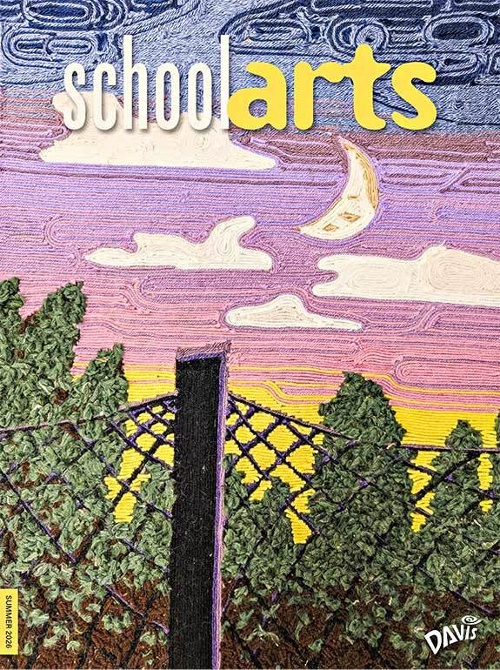

Summer 2026

Place

Art teachers and their students learn from, transform, and reimagine the places and spaces around them. Young students connect personal growth to changes in nature, elementary students create abstract faces inspired by Detroit artist Tyree Guyton, middle school students design fantastical digital gardens featuring insects and flora, and high school students use yarn to illustrate cherished childhood memories.

View This Issue

Highlights From This Issue

Editor's Letter: Place
Editor's Letter

Editor's Letter: Place

The idea of place can conjure a variety of meanings, interpretations, and responses. For me, the first image that comes to mind is a table. This inanimate object has deeper relevance because it provides a space for belonging, being heard, being cared for, and creating opportunity. I wish I had thought of art education and life in this way years ago. As they say, it’s never too late to adapt or adopt a new way of doing.

Read Article
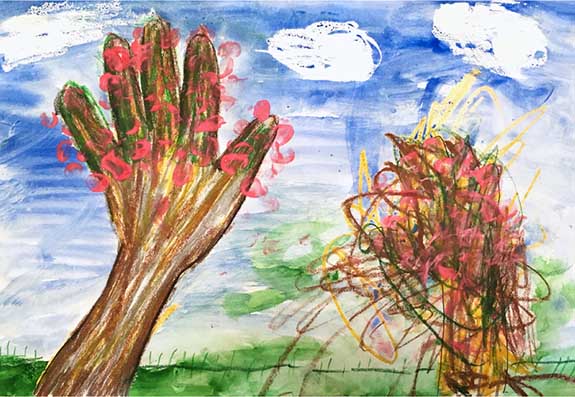
A Cherry Blossom Tree Study: Kinesthetic Learning with Children and Parents
Early Childhood

A Cherry Blossom Tree Study: Kinesthetic Learning with Children and Parents

Spring invites us to notice growth both indoors and out. In an Art with Mommy early childhood class (ages two to three), we observed the trees and flowers changing just beyond our classroom—especially the cherry blossoms beginning to bloom. Together, we compared these natural forms with our own bodies and the children wondered, “How big am I? How big are my parents? How big will I become?”

Read Article
The Freedom of Collage and Abstraction: Faces Inspired by Tyree Guyton
Elementary

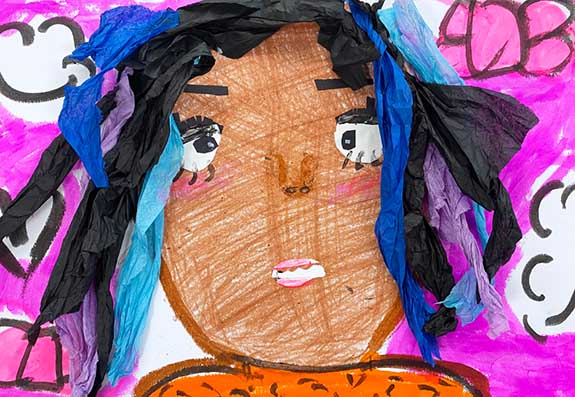
The Freedom of Collage and Abstraction: Faces Inspired by Tyree Guyton

This fourth-grade project was inspired by artist Tyree Guyton, who grew up on Heidelberg Street in Detroit. His neighborhood greatly influenced his art later in life. As a child, Guyton often visited the Detroit Institute of Arts with his grandfather. Since 1986, he has gained worldwide recognition for the Heidelberg Project, which transformed an entire street he loved into an interactive sculpture park. It showed how art can change a community.

View this article in the digital magazine.

Into the Jungle: Drawing on Imagination
Elementary

Into the Jungle: Drawing on Imagination

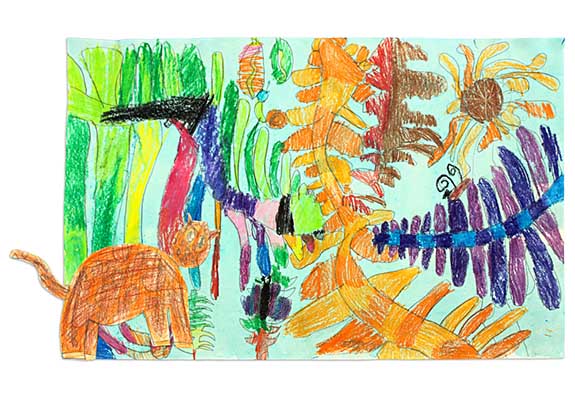
The jungle is a fascinating place for students to imagine, especially when you live near a city. The animals, the colors of the trees and flowers, and the patterns found in all these things are awe-inspiring to children. After a trip to the rainforest, one of my third-grade students shared how amazing it was with his classmates. I wanted to draw on their excitement and create a lesson in which they could use their classmate’s experience in their artwork.

View this article in the digital magazine.

Leaving a Legacy: An Eighth-Grade Mosaic Mural
Middle School

Leaving a Legacy: An Eighth-Grade Mosaic Mural

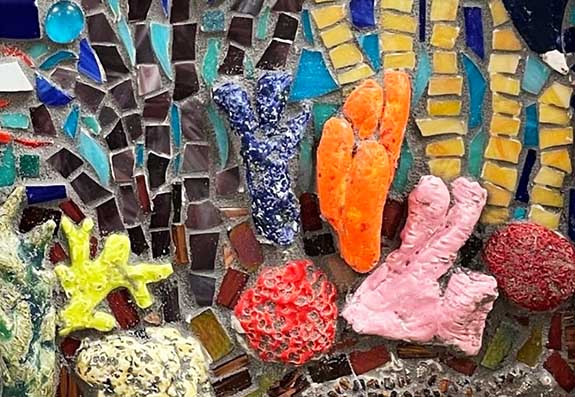
This project was inspired by the belief that artists can use their creativity to strengthen their community. Our graduating students chose to leave their mark by creating a one-of-a-kind mosaic connected to the environment, centered on the theme of One Ocean. Because our community is close to the Gulf Coast, students focused on celebrating ocean habitats connected to their own environment.

View this article in the digital magazine.

Fantastical Digital Gardens: Integrating Science into Art and Design
Middle School

Fantastical Digital Gardens: Integrating Science into Art and Design

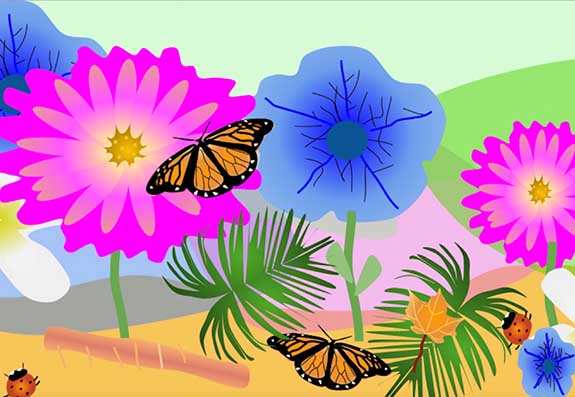
One of the most magical moments of the school year is the emergence of spring. Chirping birds, blossoming flowers, and newly formed green leaves fill our days with joy and our evenings with delight. Integrating science into art and design curricula enriches student learning. Using Google Drawings, students can create their own unique secret gardens—imagined places filled with insects, garden animals, flowers, and foliage. This is a perfect lesson to usher in the spring and engage our students in cross-curricular learning.

View this article in the digital magazine.

Yesterdays with Yarn:
High School

Yesterdays with Yarn: "Painting" Childhood Memories

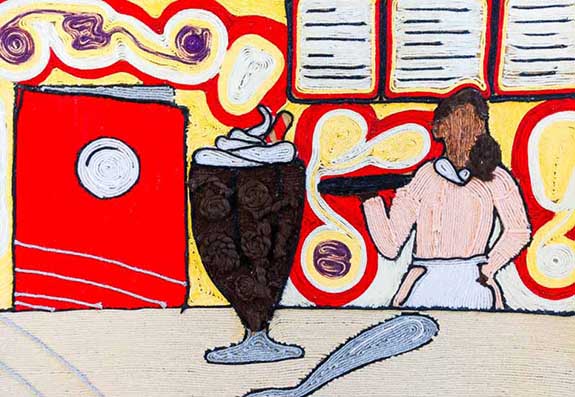
Years ago, we had artist Annie Lucille Greene come to an art teacher preservice meeting, and I fell in love with her yarn paintings. She gave each teacher a book on her work, Georgia Farm Life in the 1940s: The Farm in Yarn, and I treasure mine. The book has beautiful yarn paintings and short stories based on the artist’s childhood visits to her grandparents’ farm in Georgia. Her work celebrates her memories and culture and educates viewers about what life was like in the 1940s as a young Black girl in the South. Inspired by this, I challenged my students to choose a positive childhood memory to illustrate and share with the class. They were told that they would also create a narrative based on that image.

View this article in the digital magazine.

Vacation Destination Printmaking: Exploring Gel Plates and Linocut
High School

Vacation Destination Printmaking: Exploring Gel Plates and Linocut

As a mixed-media artist, I love using a gel printing plate because of its fun, messy, and somewhat rebellious results. I also enjoy the controllable and methodical nature of linocut printing—creating and carving a design knowing that the image will print as expected. By combining these two approaches, I developed a lesson that challenges both students who struggle with creating conceptual art and those who struggle with disciplined image-making.

View this article in the digital magazine.

Artivism: Art and Advocacy
Advocacy

Artivism: Art and Advocacy

To help my young artists understand the world around them, I introduce them to the idea of becoming “artivists”—people who use their art to make change. In my elementary art room, I teach them how to reimagine everyday materials and transform them into art with a message. I want students to understand that creativity, even in small ways, can lead to big change. The idea of turning trash into treasure not only teaches creative thinking, but also often connects to the sustainability work we do through our school’s Green Team.

Read Article
Rhythmic Letterforms
Contemporary Art in Context

Rhythmic Letterforms

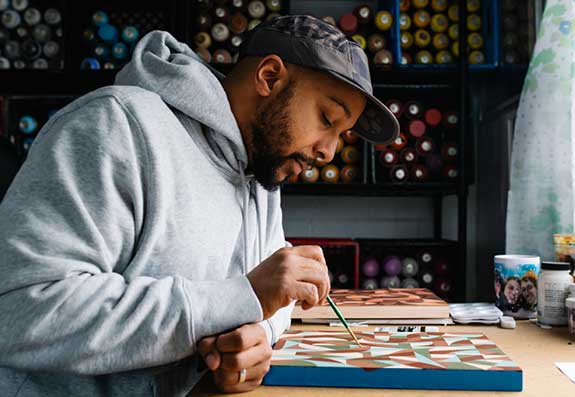
The age-old art of mural painting remains as vital in contemporary practice as it was millennia ago. The sophistication of contemporary mural painting has engendered a generation of dedicated mural artists. Among them is Ryan Adams, a Portland, Maine–based artist who sees his vocation as creating art that is both visually engaging and enhancing the surrounding structure and environment. He often collaborates with his wife, multidisciplinary artist Rachel Gloria Adams (see the SchoolArts May 2026 issue).

View this article in the digital magazine.

Always Stay in the Loop

Want to know what’s new from Davis? Subscribe to our mailing list for periodic updates on new products, contests, free stuff, and great content.

Back to top