National Picnic Day: Art by Mori Keiko (born 1939 Japan)
Keiko Mori is a National Living Cultural Treasure in Japan. Her ceramics celebrate the centuries old traditions in ceramic arts. Although ceramic picnic baskets do not strictly speaking exist in the West, the idea of celebrating a day of outdoor relaxation and food with exquisite porcelain is unavoidably enticing. Origin of National Picnic Day is unknown.
April 23 is National Picnic Day: Art by Mori Keiko (born 1939 Japan)
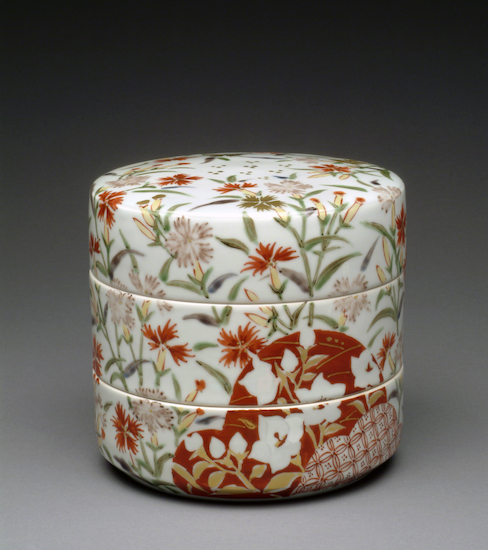 |
| Mori Keiko, Two-tiered Food Box, ca. 2000, porcelain with overglaze enamel and gilt decoration, 19.7 x 20.3 cm Philadelphia Museum of Art, © 2026 Keiko Mori (PMA-3921)
|
Keiko Mori is part of a generation of contemporary ceramics artists who, although they are credited with aesthetic and technical innovation, their work also maintains a close connection with the thousands of years of ceramic traditions in Japan. Mori has fashioned a food box out of ceramic that would have traditionally been made of bamboo, or lacquered wood. This particular form imitates the ability to decorated traditional lacquered wood food boxes with floral designs that mimic those seen in yamato-e painted screens, porcelain, and kimono patterns. The floral decoration also emphasizes the utilitarian nature of the piece, mimicking flowers that might be seen if this box were carried into a field of wild flowers.
Background
The Japanese tradition of ceramics is one of the oldest on Earth. The Jomon culture, that flourished between 5000-200 BCE, created the first ceramics on the planet that were decorated for decoration's sake rather than ritual purposes. Porcelain developed in Japan during the 1600s, pioneered mostly by Korean ceramic artists who had come to Japan in 1590. The tea ceremony (chanoyu) and flower arranging (ikebana), influenced by Zen Buddhism, are cultural developments of the 1500s that brought increased respect for the ceramic arts.
In the early 1900s, inspired by the British Arts and Crafts Movement, reacting against the rapid "westernization" and industrialization of Japan, a group of ceramic artists founded the Japanese Folk Art Association. This group of artists promoted the idea of the hands-on ceramic artist, one who took part in every stage of making ceramic vessels.
The need to restore national identity after the disaster of World War II (1939-1945) helped strengthen the movement to fortify traditional art forms. The reverence and respect for ceramic arts in Japan elevated the art form to the same status as painting or sculpture. Unlike their counterparts in China and Korea, individual Japanese ceramic artists have traditionally enjoyed almost star-like status. This idea has been perpetuated by the government sponsored exhibitions of ceramic art and public recognition of artists who are designated Living National Treasure.
Correlation to Davis program: Davis Collections -- Women Artists 2000s

Comments