National Dog Month: Art by Colima Culture (ca. 800s BCE-1521 Mexico)
During the month of August, National Dog Month celebrates our adorable dog friends, smack in the middle of the dog days of summer. Milk-Bone® brand dog biscuits founded National Dog Month in 2020 to recognize all the ways dogs make our lives better.
August is National Dog Month: Art by Colima Culture (ca. 800s BCE-1521 Mexico)
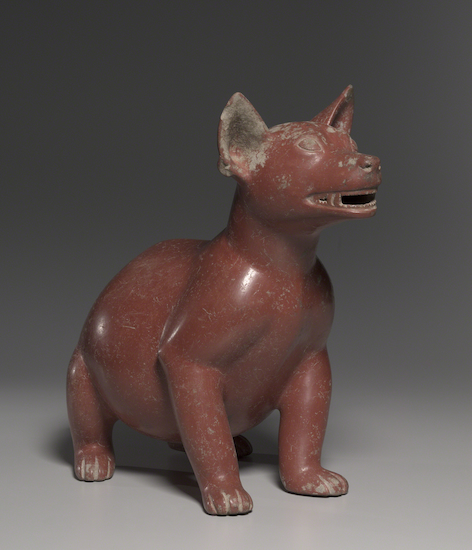
| Ancient Mexico, Colima Culture, Male Dog, 200 BCE-300 CE, earthenware, burnished red slip, 39.78 x 20.4 x 47.6 cm Cleveland Museum of Art (8s-30079)
|
Indigenous Mexican cultures were the first in the western hemisphere to domesticate dogs. The native Xolozcuintle hairless dog -- possibly related to the Chihuahua -- was immortalized in a copious number of Colima ceramics. The dog was named after Xolotl, the brother of Quetzalcoatl the important earth and water deity.
Xolotl was associated with the planet Venus which disappears for eight days and reappears as the morning star, something the ancient Colima culture associated with life-death-rebirth. Colima dog figures were produced in what is now Mexico from the 200s BCE on. Dogs were considered to be useful on one's inevitable journey to the underworld and were therefore placed with the deceased as trusty companions.
Background
Colima is a present day state in Western Mexico bordering the Pacific Ocean. It was once the region that contained numerous sophisticated, ancient cultures that flourished at the same time as the Mayan, Teotihuacán, and the Veracruz cultures. Chichimec, Tarasca, Jalisco, Nayarit, and Colima were some of the major native cultures. Archaic communities in the region appeared between 1800 and 1500 BCE. The Colima culture seems to have developed around the Los Ortices are around 500 BCE, characterized by shaft tombs and burnished redware ceramics.
Ceramic arts were practiced by Mesoamerican peoples from the time of the Olmec on. The most important objects were vases and jars meant to hold offerings in tombs, and incense burners which were used during religious and burial ceremonies. Like most Pre-Columbian art, most objects come from grave sites. Many ceramic objects have survived from the Mesoamerican cultures because of their habit of including ceramics in burials.
Correlation to Davis program: Davis Collections, Ancient Mexico

Comments