We witness daily how the arts strengthen academic achievement, build confidence, and nurture social awareness and emotional well-being. Yet despite decades of research, arts education is still treated as secondary to other subjects, especially in communities where it’s needed most. If we want arts education to be recognized as essential, we must demonstrate concrete, measurable outcomes and act on what they reveal for our communities.
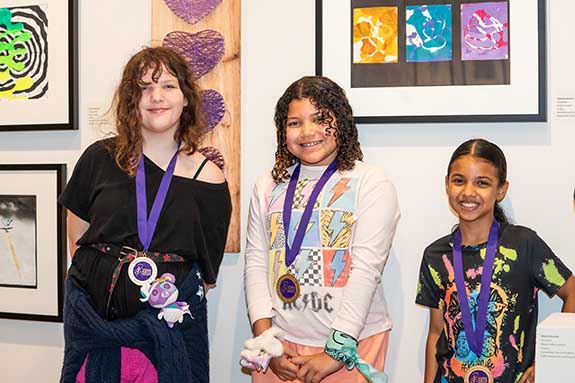
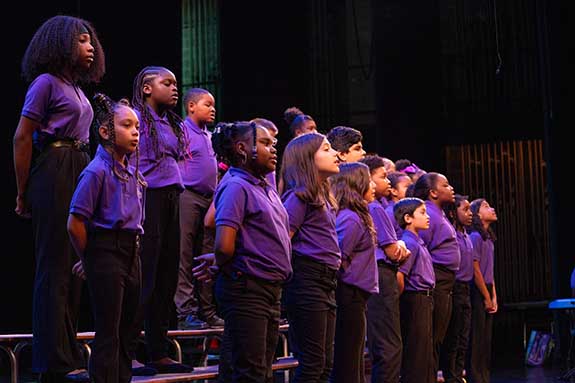
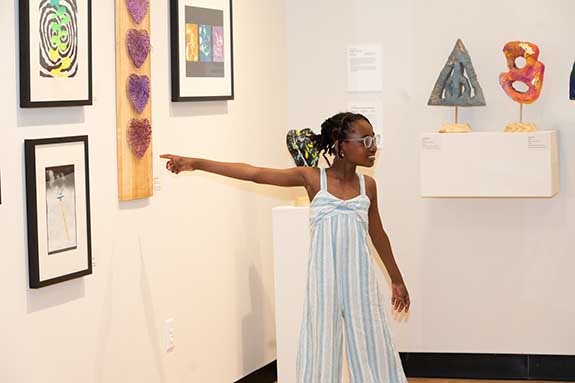
All images: CAP Performing Arts Showcase. Photos: Cathedral Arts Project.
At the Cathedral Arts Project (CAP), data has become one of our most powerful tools for sustaining and expanding access to quality arts education and therapeutic programs throughout Northeast Florida. Over the last decade, here’s what our research revealed:
97% of enrolled students were promoted to the next grade level
90% gained proficiency in their art form
84% increased classroom participation and task completion
84% strengthened communication skills with peers and adults
These outcomes don’t happen in isolation. They come from consistent collaboration, strong community partnerships, and the trust built with families, educators, and school leaders.
This past year, working closely with the University of North Florida’s Data Science for Social Good (FL-DSSG) has helped uncover stories behind the numbers. It’s one thing to see data, but it’s another to understand where the impacts are evident and where there’s opportunity for growth. So, how does this data become action? Here are a few ways it’s been put to work:
Field Trip Initiative
Through the LEAD (Landscape of Education in the Arts in Duval) survey, analyzed in conjunction with FL-DSSG, we identified a gap in arts exposure for local students. The research showed that just one cultural field trip can significantly increase literacy, math, and science outcomes. This insight inspired CAP’s Field Trip Initiative.
Last year, in partnership with eight local cultural institutions, we brought arts experiences to more than 2,000 elementary students across Duval County. Each trip was connected to classroom learning and academic and behavioral goals, supported by summer learning packets and family engagement tools to help extend the experience beyond the trip.
My favorite moment was hearing a student say it was their first time crossing the bridge to downtown Jacksonville. Another proudly raised their hand to share what they’d learned about the Great Fire of 1901 after seeing related art at the Cummer Museum. Those moments are reminders of how the arts open doors that can change a child’s world.
Principal of the Arts Award
To celebrate and encourage leadership in arts education, we created the Principal of the Arts Award, informed by data from the LEAD survey and the Florida Department of Education. The initiative honors school leaders who not only support the arts but actively work to integrate them into the fabric of their school culture.
The award is guided by an evidence-based scoring system that helps:
measure schools’ arts education implementation and outcomes.
identify opportunities to expand student access to the arts.
foster partnerships between schools and community organizations.
recognize school leaders who champion innovative arts education programs.
This award elevates leaders who create arts-rich environments where students can thrive. It also encourages other schools to set clear goals, track progress, and celebrate successes. When the arts are valued from the top down, the impact is felt schoolwide.
Conclusion
Data becomes powerful when it drives decisions, and decisions become meaningful when they’re rooted in the stories and needs of a community. This approach has helped CAP reach new milestones, but the work is far from done. Collectively, we have the opportunity to shape a future where the arts are prioritized, their impact deepens, and their reach continues to grow for years to come.
Dr. Lucy Chen is vice president of advocacy and community engagement at the Cathedral Arts Project, where she leads evidence-based initiatives to expand arts education access and improve student outcomes. Lucy@CapKids.org
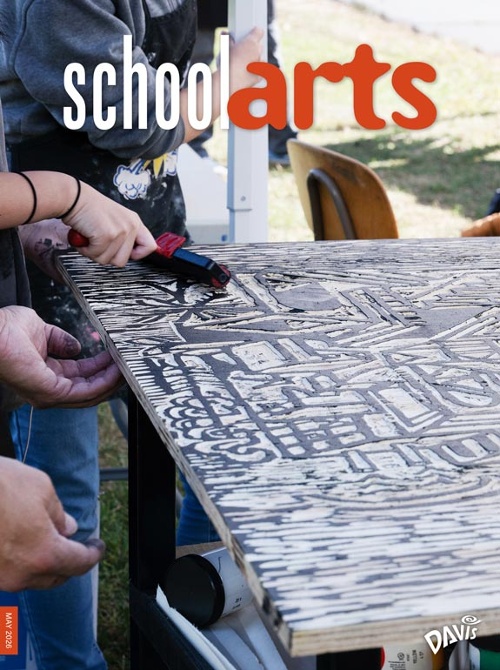
Art teachers highlight the power of collaboration, from foundational concepts and classroom practice to mural-making and community events. Young learners respond to music with abstract compositions, elementary artists build community through large-scale projects, middle-schoolers develop confidence in a teamwork-driven choice-based studio, and high-school students and staff collaborate in a community steamroller printmaking event.