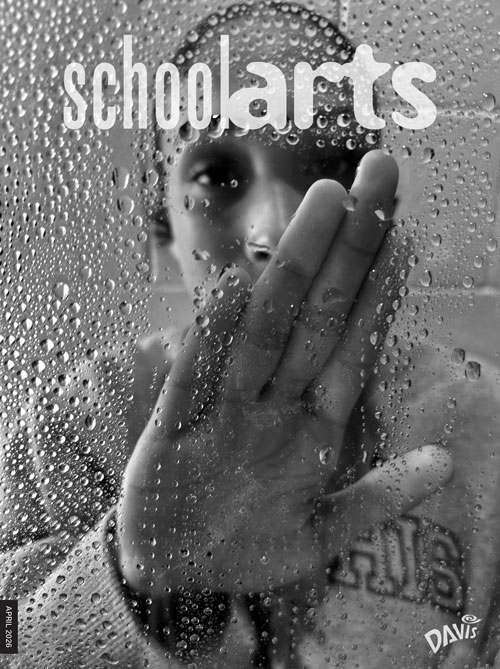
April 2026

Advocacy

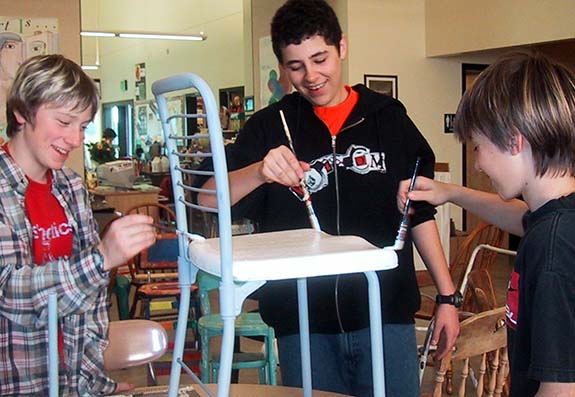
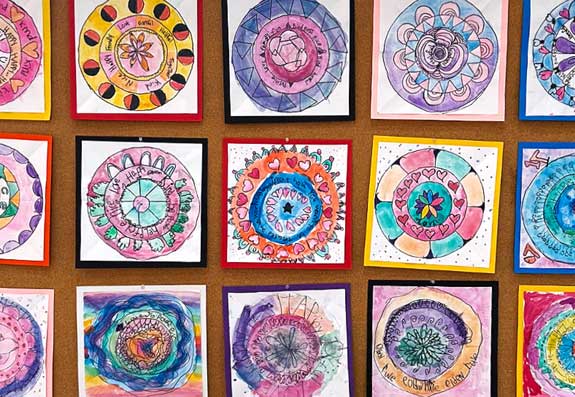
Art teachers advocate for their programs, their students, and themselves. Young students foster positivity and intergenerational connection through mandala displays, elementary students collaborate with a local artist to problem-solve and construct papier-mâché houses, middle-school students create illustrated dictionary pages to share with the community, high-school photography club students use their voices to advocate for a full class, and more.

View This Issue

Highlights From This Issue

Editor's Letter: Advocacy
Editor's Letter

Editor's Letter: Advocacy

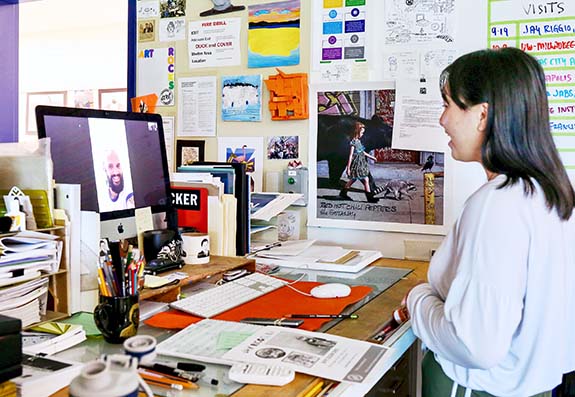
When I started teaching in 2001, I was told by fellow art educators that advocacy is an important part of art education. I wasn’t sure what they meant or what it looked like. What does it mean to advocate for your art program, students, and profession? Who are the stakeholders that should be part of that conversation? How much time does it take, or how often do I engage? Even if I couldn’t define what advocacy was at that time, I felt it as I walked through the halls of a new school.

Read Article
Co-Editor's Letter: Advocacy
Editor's Letter

Co-Editor's Letter: Advocacy

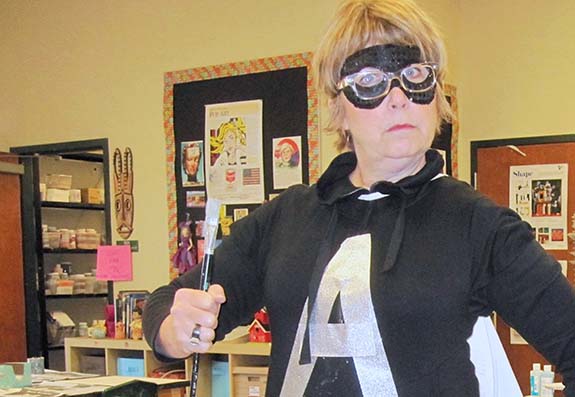
Some of you may not realize the impact you have on your communities and on the future of art education by donning your superhero cape, showing up, making your students’ art learning visible, and speaking up in favor of legislation that supports our field. We hope that the articles in this issue will inspire you to have meaningful conversations, create opportunities, and help raise awareness of Why Art Matters.

Read Article
Preservice Perspectives on Advocacy
Early Childhood

Preservice Perspectives on Advocacy

For preservice teachers, the idea of advocacy can be terrifying. You are beginning your career at a time when the arts often feel undervalued and underrepresented. I am here to let you know you are not alone. Finding your voice and speaking up for yourself, your students, and art education is a process that often takes slow, small steps. We all possess the skills and capabilities to be an advocate for the arts, and understanding that is necessary both in preservice and active teaching.

View this article in the digital magazine.

Strengthening Connections through Advocacy
Elementary

Strengthening Connections through Advocacy

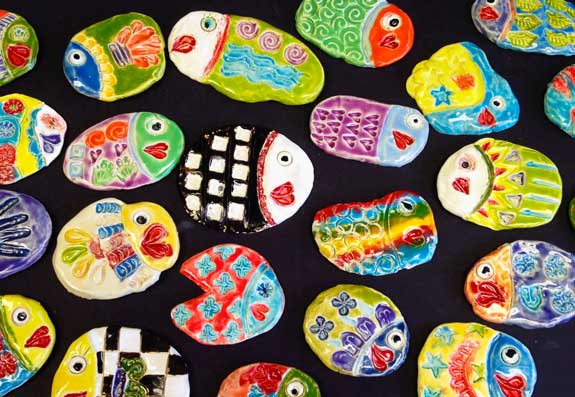
When creativity meets collaboration, the results are remarkable. Willow Brook Wildcats have been transforming our school, one wall at a time, with large, collaborative installations. Beyond our studio walls, building a community of collaborators has given me thinking partners with infinite possibilities. There are endless benefits to working with one another, sharing, inspiring, fostering, and growing with your school family and professional learning network.

View this article in the digital magazine.

Tiny Houses: An Artist-in-Residency Experience
Elementary

Tiny Houses: An Artist-in-Residency Experience

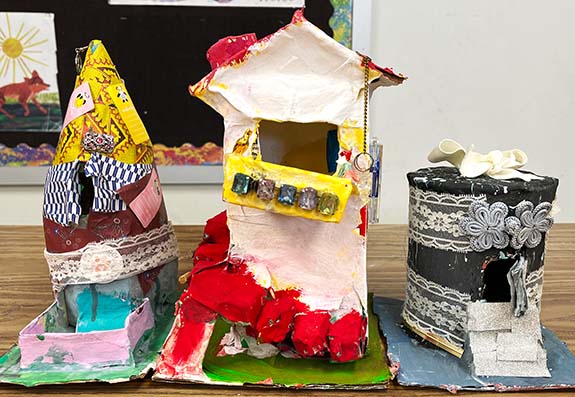
Artist-in-residency experiences should happen far more often than they do in public schools. Collaborating with local professional artists brings an energy and authenticity to the classroom that impacts students in ways traditional lessons can’t. I feel incredibly fortunate to work at a school with a supportive PTA that helps fund these opportunities. When additional funding is needed, I apply for local and state arts grants to make them possible.

View this article in the digital magazine.

Art Read Think Day: Illustrated Dictionary Pages as Visual Voice
Middle School

Art Read Think Day: Illustrated Dictionary Pages as Visual Voice

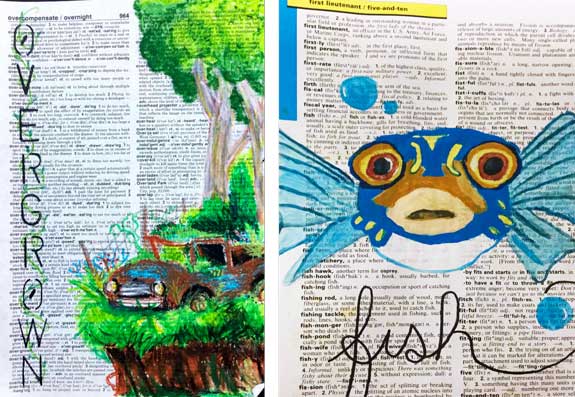
My mother’s favorite unabridged dictionary is part of my personal history. I had grown up with this gargantuan volume, leafing through to find definitions for unfamiliar terms. When it cracked at the spine, I took the loose pages to school instead of wasting them. What started as a sentimental moment turned into a literacy-rich art project for my middle-school students, many of whom speak multiple languages. When students started to scroll through the dictionary pages, they were spellbound. They enjoyed discovering new words, contrasting the different meanings, and choosing a single word to visually illustrate.

View this article in the digital magazine.

Small-Town Advocacy
Middle School

Small-Town Advocacy

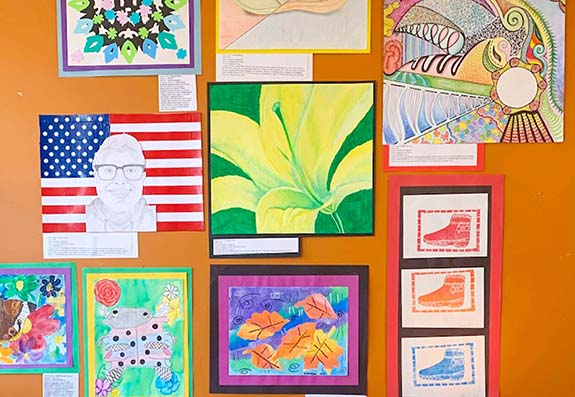
Promoting music programs, sports teams, and academic achievement is commonplace in education. I often say, “Art is quiet, music is loud, sports are thunderous.” In art education, we don’t have parades or halftime shows, but we do have local businesses willing and excited to display student artwork. Displaying student art has become an annual tradition in our town through the ArtWalk, which features thirty to thirty-five pieces of student art (Y5–12) from each school.

Read Article
Awareness, Understanding, & Change through Advocacy
High School

Awareness, Understanding, & Change through Advocacy

Visual art is a form of communication; it has the power to teach and be used as a tool for change. In other words, art can be used for advocacy. While it can look the same or similar, advocacy at the various education levels is different. As a secondary art educator, especially during challenging times, it has clearly been important to advocate for my program and students. Why should we advocate? Consider this quote by Ernest Boyer, president of the Carnegie Foundation for the Advancement of Learning: “Art is humanity’s most essential, most universal language. Now more than ever, all people need to see clearly, hear acutely, and feel sensitivity through the arts…”

View this article in the digital magazine.

Advocacy in Focus: Picturing the Impact on Student Engagement
High School

Advocacy in Focus: Picturing the Impact on Student Engagement

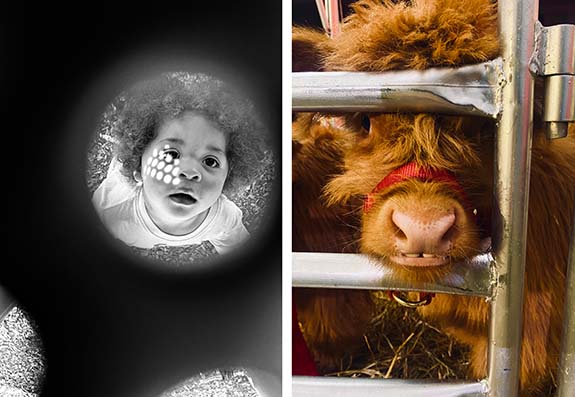
Robert Bresson said, “Make visible what, without you, might never have been seen.” What might have never been seen if you, my dear art teacher, had not made it visible? Photography was my first love as an artist. Photographs can validate our existence. They convey messages. They tell our stories and show us places, people, moods, and moments. Placing cameras in the hands of children is like giving them a permission slip to choose moments to freeze forever, by their own design. It’s empowering. I have also observed that photography can bring people together.

View this article in the digital magazine.

Fantastic Fantasy
Contemporary Art in Context

Fantastic Fantasy

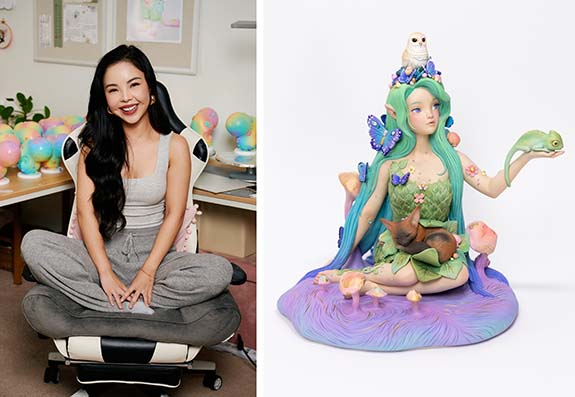
Fantasy art is one of the few genres that has endured since humanity’s earliest artistic expressions. The universal nature of fantasy art is brilliantly represented by the intriguing and beguiling sculptures of Chinese-born, New York–based artist Tina Yu. Yu’s works draw on the Asian aesthetic of “cuteness,” called keai in Chinese and kawaii in Japanese. Yu brings her imaginary characters to life in painstakingly detailed, personally meaningful sculptures, guided by her so-called “Double C” (cute and creepy) style.

View this article in the digital magazine.

Always Stay in the Loop

Want to know what’s new from Davis? Subscribe to our mailing list for periodic updates on new products, contests, free stuff, and great content.

Back to top