Teaching with Themes in the Art Room
Imagine what introducing the last new project to your students looked like. It’s a safe guess that a few dove right in. It’s also safe to say that others hesitated. “What are we supposed to draw?” some asked. Others shrugged, unsure where to start.
Now imagine a different scene. The class is exploring a theme like identity. Students are discussing who they are, sketching symbols that represent their lives, and making connections to artists who’ve explored similar ideas. The room feels different, more focused, more engaged, more invested.
If you’ve ever introduced an art project and been met with “What am I supposed to draw?”—you’re not alone. Getting students started is one thing. Getting them invested is another. That’s where a theme-based approach can help.
Starting with Ideas
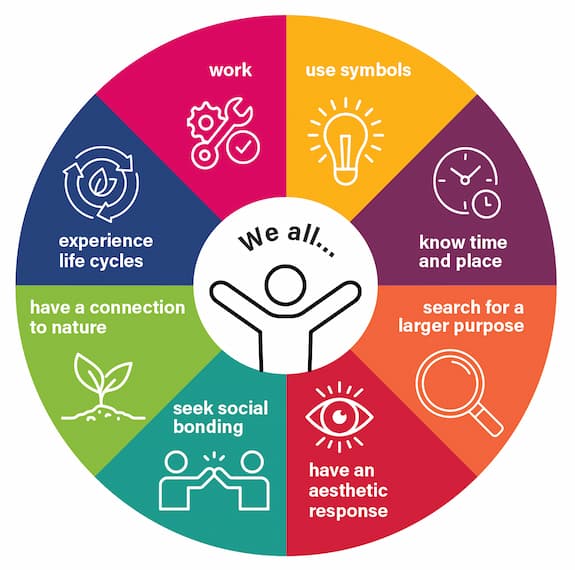
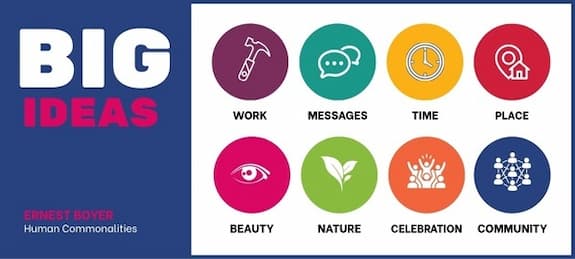
Instead of jumping straight into a project, theme-based teaching begins with a big idea—like identity, community, or change. Suddenly, students aren’t just making art to complete an assignment. They’re exploring something that connects to their lives. And that changes the energy in the room. When students have something to say, the work becomes more personal—and more meaningful.
Why it Works Across K–12
One of the best things about teaching with themes is how flexible it is. A kindergartener and a high school student can both explore the same theme, just at very different levels. For younger students, it might look like drawing people and places they know. For older students, it might turn into more complex, idea-driven work. Either way, they’re building skills and understanding at the same time.
What It Looks Like in Practice
With Davis Publications, theme-based learning isn’t something you have to piece together on your own; it’s built into the curriculum. Units are organized around a central idea, with lessons that:
- Help students connect art to their own experiences
- Build skills over time (instead of one-and-done projects)
- Give students room to make choices
- Support a wide range of learners in the same classroom
So instead of constantly reinventing lessons, you have a structure that supports how students learn best.
See an example, download the article below.
More Meaningful Teaching
Let’s be honest—planning a full K–12 art program can feel overwhelming. Trying to keep things engaging, skill-based, and meaningful (all at once) is a lot. A theme-based approach helps bring those pieces together. It gives you a clear path to follow, while still leaving space for creativity, yours and your students’.
When you teach with themes, something subtle but important happens. Students stop asking, “Is this good?” and start asking, “Does this say what I want it to say?” That’s a different kind of learning, and it’s exactly what many of us are aiming for in the art room.
If you’re looking for a way to bring more connection, depth, and flexibility into your teaching, it’s worth exploring how a theme-based curriculum from Davis Publications can support that shift. Start with our professional paper on the topic.
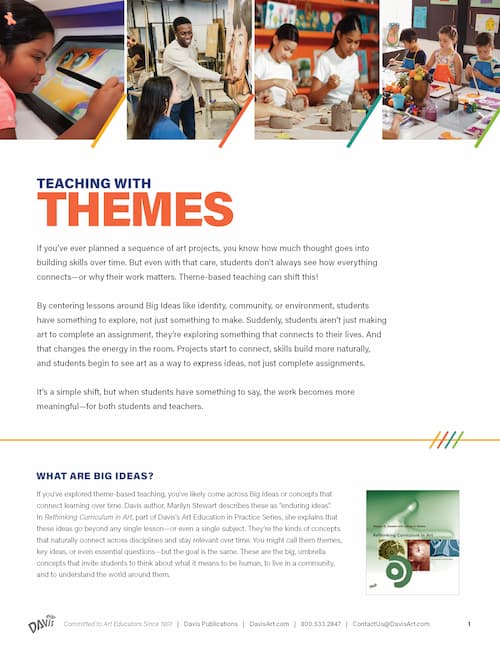
Download a printable PDF of the professional paper from Davis, Teaching with Themes.
Resources
Looking for ways to bring more curiosity and conversation into your teaching? Check out these additional resources:
- Teaching with Themes Webinar
- Rethinking Curriculum in Art
- What’s the Big Idea? Teaching Art with Themes, K12Artchat the podcast, Episode 252
- Modalities & Seeking Common Ground Through Contemporary Art, K12ArtChat the podcast, Episode 210
- K12 Curriculum & Resources to support teaching with themes
- What’s the Big Idea? flyer

Comments